Showing posts with label Young Adult. Show all posts

Thursday, August 27, 2020

The Drowned Cities

 by Paolo Bacigalupi

434 pgs  (Ship Breaker series #2)

Set in the same war-torn version of the world he created in Ship Breaker, Paolo Bacigalupi's The Drowned Cities--while not a sequel--further builds on the dystopian reality now facing humanity, along with the genetically engineered monsters it has created.

The book begins in a dark prison cell, where Tool, a killing machine created from tiger, dog, hyena, and human genes, has been kept and tortured. The guards believe the creature has finally died, but when one of the unlocks the gate to enter, Tool escapes in a whirlwind of death and carnage that takes mere seconds to complete.

Mahlia is a teenage girl who was orphaned by the war several years ago. She now scrapes by an existence working as a medic, scavenging what little medicines remain and using them to treat freedom fighters in the ongoing war between the factions. Her life was once saved by a man she calls Mouse, and the two have looked out for one another ever since.

When together they come across Tool, unconscious again and near death from multiple wounds, Mahlia recognizes an opportunity to possibly escape The Drowned Cities and the war once and for all.

The Drowned Cities is a dystopian book written for slightly younger readers, but don't let that lead you to assume the dystopian elements of the story have been watered down to make them more palatable for teenagers. Bacigalupi's story is just as dark, violent, and hopeless as McCarthy's The Road, although I can't imagine McCarthy would have considered adding a tiger-dog-hyena-human hybrid as one of the main characters.

★ ★ ★ ☆ ☆

Tuesday, April 28, 2020

Squirm

by Carl Hiaasen
276 pgs

Squirm is one of Carl Hiaasen's books written for younger readers (but still entertaining for adults) and it features Billy Dickens, a kid who lives in Florida with his mother and sister. His father left them when Billy was 3 years old, and since the only contact they've had from him since is the check he sends every month like clockwork, and since his mother always cuts up the envelope with the return address into tiny pieces, Billy doesn't even know where he lives, let alone what kind of a man he was, or what he does for a living.

But that hasn't stopped him from trying to learn more about his father. And when one month his mother fails to cut up the envelope into small enough pieces, Billy is able to figure out his father's current address, and using almost all of the money he's saved up from working at the supermarket, buys a plane ticket to Montana to go see him.

While in Montana, Billy meets his father's new wife and stepdaughter, who are members of the Crow Nation, but he never sees his father. It seems like even his new family doesn't know much about the man. They tell him he has some secret government job involving drones and that they don't know where he is most of the time.

But as Billy will eventually learn, even though his father wasn't involved in raising him, Billy still shares a lot in common with him. And eventually, those similarities will bring them together.

Squirm is a fun read. Hiaasen's humor is still there, even if it's bridled for younger audiences, but it's still enough to have made me smile often throughout.

★ ★ ★ ☆ ☆

Sunday, January 12, 2020

Starsight

by Brandon Sanderson
461 pgs  (Skyward series #2)

Picking up where Skyward left off, Starsight takes Spensa Nightshade, the young, newly-trained, intergalactic fighter pilot, away from Detritus, the human prison colony she's called home her whole life, and onto the massive Krell spaceship. She's there as a spy, her true identity as a human hidden by a holographic disguise. She's there to try to discover and steal the source of hyperdrive space travel and hopefully, save the human species from extinction at the hand of the Krell.

But Spensa is in way over her head. She's not trained to be a spy. She wasn't sent to the Krell ship by her commanding officer, but an unexpected and unique opportunity presents itself to her. Without considering the risks or possible ramifications of her decision, she leaves and travels to the Krell's ship.

Starsight is a worthy follow-up to Skyward. It's full of action scenes (which Sanderson excels at) and Spensa's knack for shooting from the hip and letting motions drive her actions, provides for a very enjoyable story to read. I'm excited to see how things get wrapped up in the next book.

★ ★ ★ ★ ☆

Thursday, June 6, 2019

Skyward

by Brandon Sanderson
510 pgs  (Skyward series #1)

Skyward begins a new series by Brandon Sanderson (which brings the running total to four active series he's writing). The series is targeted to young adult readers and falls into the science fiction genre. The book reminded me of both The Last Starfighter and Ender's Game, two of my favorites in the genre.

Spensa is a young girl who has dreamt her entire life of following in her father's footsteps and becoming a fighter pilot, protecting what remains of the human race from the Krell, the alien race that has continually been attacking them, ever since they landed on the world of Detritus. But the likelihood of that dream coming true, and Spensa ever being given the chance to attend flight school, are remote at best. Because Spensa and her widowed mother have been living with the shame of what her father did on his final battle against the Krell. In one of the largest battles in history, Spensa's father, one of the greatest fighter pilots ever, inexplicably deserted his squadron and was killed, leaving Spensa to spend the rest of her life branded as the daughter of a coward.

Skyward is a promising start to a series Sanderson has said will likely be four books long, and it has everything you would expect from one of his books. It has fast-paced action scenes, characters that are relatable and endearing, and just the right amount of Sanderson's subtle sense of humor.

Starsight, the second, is due out in November, giving me another Sanderson book to look forward to while I wait for the fourth book in The Stormlight Archive series.

★ ★ ★ ★ ☆


Monday, February 25, 2019

Bluescreen

by Dan Wells
335 pgs  (Mirador series #1)

In the year 2050, everyone is constantly connected to the Internet via their djinni, a smart device implanted directly in their head. The djinni serves as a communication device, computer, GPS, house key, bankcard, and a host of other functions all at once. People are able to plug devices and drives directly into their djinni and download new software, games, and anything else they want 24/7. Marisa and her friends Anja, Sahara, Fang, and Java, who call themselves the Cherry Dogs, spend most of their time immersed in virtual-reality games and plan to eventually become professional "Overworld" players.

One day, Anja buys a new "plug-in" on the street called Bluescreen and brings it back to the Cherry Dogs to try. It's supposed to have a drug-like effect on users, but when Anja takes it, her behavior is alarming. She behaves as if she's in a trance for a period before eventually losing consciousness. Marisa and the group start investigating who's behind Bluescreen and what it's intended to do to those who use it, but their investigation puts their lives in danger.

Bluescreen is a smart, tech-savvy science-fiction thriller that was written for a slightly younger audience, but it should appeal to anyone who enjoys the genre. It's the start of a series that has two follow-up books already out.

★ ★ ★ ☆ ☆

Saturday, February 3, 2018

Skink--No Surrender

by Carl Hiaasen
281 pgs

Skink -- No Surrender is Carl Hiaasen’s newest book written for younger readers. This time around he borrows one of his more colorful characters from a few of his books written for “older” readers: Skink. Skink is a one-eyed, unkempt, half-naked homeless man who was once the governor of Florida, but who decided one day to walk away from the job, and society as a whole, so he could begin doling out acts of retribution against individuals and companies that didn’t share his sense of stewardship for the fragile Floridian ecosystem.

Richard is a 16-year-old, who often walks at night along the beach with his cousin Malley hoping to catch a glimpse of a mother loggerhead sea turtle laying her eggs. But Malley fails to show up one night for a scheduled search, and when Richard tries to contact her to find out where she is, he discovers she has left town with a guy she met and had been communicating with in a chat room.

While the police quickly become involved in searching for her, Richard believes he knows her best and therefore has the best chance of finding her. So, he sets out to find her and bring her back home. Fortunately for him (and us, the readers), he’s accompanied by the crazy old man he met the night before on the beach, who was buried completely in the sand, breathing through a straw, waiting to ambush anyone looking for turtle eggs to sell on the black market.

Once again, Hiaasen’s love for his home state, with its beauty, crazy inhabitants, and deadly creatures, is obvious while he tells his story. It’s a fun and entertaining book, and told as only Hiaasen could.

★ ★ ★ ☆ ☆

Friday, January 19, 2018

The Fever Code

by James Dashner
344 pgs  (Maze Runner series #5)

The Fever Code is presumably the final installment in James Dashner’s “Maze Runner” series. While it was written last, chronologically it’s the second book in the series, bridging the events of The Kill Order and The Maze Runner.

The book introduces five-year-old Stephen, soon to be renamed Thomas by WICKED. Thomas is taken from his family by soldiers from WICKED (World in Catastrophe, Killzone Experiment Department) and taken to their complex, where he meets Teresa, Newt, Minho, Alby, and Chuck. All of them except for Newt are immune to the Flare which has decimated the world’s population, and they’ve been brought to the complex so they can be studied by WICKED and assist them in developing the maze.

The book is the weakest, and thankfully, the last book in the series. It filled in the remaining gaps in the story, but it lacked much by way of surprises and suspense. Admittedly it’s hard to have those in a book which is a prequel to the most popular book in the series. You already know what the ultimate fate of the characters is, and the only reason to read it is to learn more of their backstory.

If you’ve read the previous four books, you’ll want to read this one. But if you haven’t, don’t start with this one. You’re not likely to read the others, if you do.

★ ★ ☆ ☆ ☆

Thursday, September 7, 2017

The Kill Order

by James Dashner
327 pgs  (Maze Runner series #4)

The Kill Order is the first of two prequels to James Dashner’s Maze Runner trilogy. Set 13 years before Thomas arrived in the Maze, the book tells the story of Mark, Alec, Trina, and a small group of others who survived the solar flares that nearly wiped out humanity. But the survivors are far from safe, a new virus has begun spreading, one that turns those who catch it into raving, murderous, creatures.

The story doesn’t waste any time getting started. Mark, Alec, and the others in their small group live in a small village in the mountains of North Carolina. As they’re together, they hear the engine noises of a Berg approaching. When it arrives, it hovers over their village, the side doors open, and men wearing uniforms begin to shoot at them with darts. Mark and Alec are able to board the Berg and discover a box with a biohazard symbol on it containing 24 darts holding the Flare virus. As the story unfolds, Mark and Alec realize that some who are infected with the Flare are immune to its effects.

Who is intentionally infecting people with the Flare? And why? How are some people immune to its effects? Does that mean there’s cure possible?

The Kill Order is a solid addition to Dashner’s series. It sheds some light on some of the mysteries of the first three books, but leaves plenty of things unanswered. Enough to fill one more book.

★ ★ ★ ☆ ☆

Tuesday, September 5, 2017

Alcatraz vs. the Evil Librarians: The Knights of Crystallia

by Brandon Sanderson
296 pgs  (Alcatraz vs. the Evil Librarians series #3)

I’ve already mentioned this in my reviews of the previous two books, but my son and I are really enjoying reading this series together. The action and the humor have kept him captivated, and in The Knights of Crystallia, he got a taste for what I’ve always enjoyed about Sanderson’s books: the worldbuilding. Sanderson is a master at creating new and vibrant worlds for his stories--no small accomplishment, considering how prolific a writer he is. In book three, Alcatraz and his friends finally make it to the Free Kingdoms, the magical world few of us Hushlanders even know exists.

Alcatraz finally makes it home to Nalhalla, but finds out as soon as he does, that negotiations are already underway to establish peace with the Librarians. The country of Mokia is being used as a bargaining chip in the negotiations, and Alcatraz quickly suspects that those trying to negotiate with the Librarians are actually in league with them, and that it’s all part of the Librarians’ plans to gain control of Mokia.

Despite Alcatraz’s ongoing claims that he’s not the hero of these books, he’s once again thrust into that role, and must find a way to expose the proceedings for what they really are and thwart the evil plans of the Librarians.

This was probably our favorite book in the series so far. The fact that it’s set in the Free Kingdoms helped bring a new level of magic to the story and once again, as soon as we finished it, my son went and grabbed book four off the shelf.

★ ★ ★ ★ ☆

Tuesday, August 15, 2017

Ship Breaker

by Paolo Bacigalupi
323 pgs  (Ship Breaker series #1)

One of my favorite authors, Dan Simmons, once said, “I believe that almost every writer has at least one dystopian novel in him or her that’s clawing and scratching to get out.” I mention this by way of justification, since I feel like the phrase “young adult dystopian fiction,” which I’m about to use again, can be found in an inordinate number of my book reviews recently, and I don’t think of myself as a big YA dystopian fiction fan. I just happen to like a lot of different authors…who happen to be letting their dystopian book claw its way out right now, and they happen to be writing it to a YA audience.

Paolo Bacigalupi’s Ship Breaker is the first in his young adult dystopian fiction series. It takes place about 100 years into the future, and is set along the Gulf Coast after the ice caps have melted, the ocean levels have risen to drown cities like Houston and New Orleans, the government has broken down, and the gulf between the “haves” and the “have nots” has grown exponentially.

Nailer is a teenage ship breaker. He works on a crew salvaging valuable materials off of now-defunct oil tankers. His father is an abusive and murderous drug addict, his mother is dead, and Nailer is barely able to survive from day to day. The only way things will ever change for him is if he comes across a Lucky Strike, a piece of jewelry, a barrel of oil, or anything else that would allow him to buy his way out of his current station.

His Lucky Strike may have finally arrived when Nailer comes across a wrecked luxury ship the day after a hurricane. The lone survivor is a teenage girl, the uber-rich daughter of one of the richest men left in the world. Nita is in terrible danger and Nailer finds himself caught between letting her die and claiming the ship and all its valuables as his, or rescuing her and risking spending the rest of his life slaving away on tankers.

I became a fan of Bacigalupi when I read The Water Knife a few months ago. That book impressed me with the way he took the problems of today, and followed them to a logical and dismal future, if left unchanged. He does the same thing, only for a potentially younger audience with Ship Breaker. It’s an intelligent and compelling start to a series and I’m looking forward to what comes next. 

★ ★ ★ ☆ ☆

Wednesday, May 10, 2017

Alcatraz vs. the Evil Librarians: The Scrivener's Bones

by Brandon Sanderson
343 pgs  (Alcatraz vs. the Evil Librarians series #2)

We recently discovered my 10-year-old son is dyslexic. For years we thought his handwriting would improve and he’d eventually stop confusing his “b”s and “d”s and writing certain numbers backward. But as he got older, and those things weren’t improving, we had him tested and were glad we did. I want my son to enjoy a lifetime of reading. I don’t want the fact that it’s not as easy for him as it is for his peers to discourage him from reading and prevent him from learning from and enjoying books for the rest of his life.

As we started educating ourselves about the best ways to address dyslexia, I realized it was probably a good idea to once again start reading with him. It’s something we did when he was younger, but got out of the habit of doing as he got older. So I gave some thought into what to read with him. I wanted something that we’d both enjoy. I wanted something he’d look forward to reading with me every night, and something I would be just as excited about. I’ve made it well known that I’m a big fan of Brandon Sanderson’s books, but as big a fan as I am, I’d never read any of his Alcatraz books. I thought now was the perfect opportunity to do so.

I couldn’t have picked a better series to read with my son. It’s got action, excitement, a great system of magic (every Sanderson book does), and an underlying sense of humor, which appeals to both my son and me (and that’s not an admission that my sense of humor is juvenile). When I wrote my review of the first book in the series, Alcatraz vs. the Evil Librarians, I mentioned the fact that as soon as we were done with the book, my son went to the bookshelf and grabbed the second book and set it out so that it was ready to be started. The same thing happened when we finished this one. It’s been very rewarding to see the difference in my son’s attitude about reading since we started reading these books together. It used to be a battle with him every night when I tried to get him to find a book to read and go to his room to read before bed. Now, without me having to say a word, he comes to me with the book in his hand and asks if we can read now. We start book III tomorrow.

★ ★ ★ ★ ☆

Saturday, April 29, 2017

Alone

by Scott Sigler
539 pgs  (The Generations trilogy #3)

Alone concludes Scott Sigler’s The Generations trilogy, a trilogy that got off to an excellent start with Alive, but which gradually lost some of its momentum and appeal for me by the time it was all over.

Em, along with the remaining Birthday Children, who woke up with no memories on a ghost ship traveling through space, have finally found refuge on Omeyocan, the distant planet their creators genetically engineered them to survive on and sent them to thousands of years ago. Em united the different groups that had formed after everyone woke up. She’s led them in their fight to survive on Omeyocan. She’s helped them fend off their creators, who sent them there so they could “overwrite” their consciousnesses and take over their young healthy bodies once they had arrived. She’s helped them establish peace with the indigenous species on Omeyocan, and now…it’s all being threatened. They’ve learned other alien races are on their way to Omeyocan as well, drawn by the same message the Birthday Children’s creators received thousands of years ago. Each of those alien races shares the same intent to conquer Omeyocan and call it their own. Em has to find a way to protect her small group and make sure everything they’ve survived so far hasn’t been for nothing.

The series began with such a great first book. I’ll admit the idea seems more than a little derivative of The Maze Runner, but Sigler still pulled it off so well. The idea was compelling and left me at the end of the first book with a lot of excitement over what was to come. The last two books were interesting and entertaining, but I was a little let down. 

★ ★ ★ ☆ ☆

Thursday, April 20, 2017

The Giver

by Lois Lowry
225 pgs

Before young adult dystopian novels became all the rage with The Hunger Games, Divergent, and The Maze Runner series, there was The Giver. It’s a relatively short book, but it’s one filled with commentary on society, government, bioethics, and the danger of letting people be trusted to make their own decisions.

Jonas is a 12-year-old boy who lives in a community where everyone has been genetically engineered and groomed from a young age to grow up to play a specific role in society. Family units are assigned, not created. Emotions and feelings are not just discouraged, they’re punished. With the exception of one man, no one has any concept of what life could be like outside the strictly controlled and manipulated community.

When Jonas finally reaches the age when he and his classmates are to find out what their assigned roles will be as adults, they are brought before the Chief Elder, who, one by one, makes the assignments. Jonas is initially skipped in the order of assignments and doesn’t learn what his assignment will be until everyone else has gone. He learns he isn’t going to receive a normal assignment like the rest of his classmates did. Instead, he has been selected to be the next Receiver of Memory, and that he is to be trained in isolation by the current Receiver of Memory, whose role is now is to be “the giver” of all his memories to Jonas.

The next day, when Jonas reports to The Giver, the process begins of transferring the memories from all of history into Jonas. Jonas receives the memory of changing weather, of the coldness of snow, and the exhilaration of a sled ride down a hill. Of emotions like love and happiness, and fear and anger. He’s given the memory of pain and war, and of every possible memory mankind at one point experienced. As these memories accumulate in Jonas, he learns that he has no way to share the joy and the burden of these memories with anyone else. No one else has any concept of what he’s experiencing and wouldn’t be able to understand what he tried to describe.
These memories not only allow Jonas to experience feelings and emotions no one else around him does, they also open his eyes to things happening “for the good of the community” that he can no longer accept and deal with.

The Giver has a lot to offer in its few pages. It’s not surprising most of my kids read it for school. Those of us who went to school before it was required reading, would do well pick it up and read it.

★ ★ ★ ☆ ☆

Friday, March 17, 2017

The Outsiders

by S.E. Hinton
180 pgs

The Outsiders is one of those books that I read so long ago and remember really enjoying, but can’t remember anything about, nor why I liked it. So I decided to read it again. The risk in doing so is that maybe the book wouldn’t stand the test of time and I’d come away wondering why I liked it the first time around. But since it’s remained a staple on most junior high schools’ assigned reading lists for the last fifty years (its 50th anniversary is this month) I was pretty sure that wasn’t going to happen. It didn’t. It’s still such a great story.

S.E. Hinton uses Ponyboy, her first-person narrator to tell the story of himself and his fellow “Greasers,” and their repeated run-ins with the “Socials,” or “Socs.” Once again, I enjoyed Ponyboy’s simple and direct telling of the events and circumstances the Greasers deal with. He does it in such a casual way, which seems to be in direct contradiction to the gravity of the events the story contains.

What I don’t think I knew the first time I read the book, and which makes the book that much more impressive, is the fact that Hinton wrote the book when she was 16 (after failing her creative writing class in high school). She sold the book to a publisher when she was 17, and it was published when she was 18. Knowing that this time around gave me a different perspective into Hinton’s seemingly simple style of storytelling. 

But while the story is simple in the way it’s told, her characters shouldn’t be described the same way. Hinton shows the foolishness of stereotypes, and how unreliable outward appearances usually are. The Greasers, while tough on the outside, demonstrate a lot of emotions throughout the book.

Stealing the adjective used with significance in the book, The Outsiders, fifty years later, has stayed golden.

★ ★ ★ ★ ☆

Monday, January 30, 2017

Alcatraz vs. the Evil Librarians

by Brandon Sanderson
313 pgs  (Alcatraz vs. the Evil Librarians series #1)

Alcatraz Smedry is a 13-year old foster child, who has a propensity for breaking things. As a result, the families he’s living with often don’t know how to deal with him and his case worker has to find him a new set of foster parents for him to go live with. 

But all that changes on the day he accidentally set his current foster parents’ kitchen on fire. It happened to be on his birthday and he had just received a strange package with a note attached. The package contained a bag of sand, and the note said it was his inheritance and came from his mom and dad—his real ones. As he’s getting ready to be taken away once again, a man he’s never met before shows up, claims to be his grandpa, wishes him a happy birthday, and explains to him that he needs to come with him, and to make sure to bring the sand.

And so begins an adventure which opens Alcatraz’s eyes to a whole new world he had no idea existed: the Free Kingdoms. He learns that the world he’s been living in (the one we also live in) is controlled by librarians. They control the books, and therefore information, and they’re able to keep the existence of the Free Kingdoms a secret.

Alcatraz learns that his propensity to break things is actually a magical talent he was born with, and one that will save his life numerous times throughout the book. He also learns that he has an important role to play in stopping the evil librarians from conquering the remaining Free Kingdoms.

Alcatraz vs the Evil Librarians is written for a younger audience, and as such, my 9-year-old son and I read it together. He loved it. Each night he’d grab the book off the shelf and let me know it was time to read. He’s usually not a big fan of reading, so this was exactly what I was hoping for when I bought the series. I’m a huge Sanderson fan, and I thought, if he could direct his skills at building worlds with unique and engaging systems of magic to a younger audience, and if he could do it with the same sense of humor he often inserts into his adult books, then there would be a pretty good chance my son would get hooked. When we finished this one, my son took it back to the bookshelf and grabbed book II, which made me happy.

★ ★ ★ ☆ ☆

Wednesday, December 28, 2016

The Death Cure

by James Dashner
327 pgs  (The Maze Runner series #3)

The Death Cure is the third book in James Dashner's The Maze Runner series. It picks up the story shortly after The Scorch Trials ended. Thomas is being held in isolation by WICKED and he's still unsure whether he can trust Teresa, who believes what they're being told, that "WICKED is good."

When he's finally released and allowed to rejoin the other Gladers and members from Group B, they're all told by Assistant Director Janson that a cure for the Flare exists and that not everyone in their groups is immune. WICKED once again needs their help obtaining the cure...before it's too late for their friends.

The Death Cure is essentially the end of a trilogy. There are two more books in the series, but they're both prequels to the events of these three. And while I plan to read the prequels, I wasn't very impressed with Dashner's conclusion. There's plenty of action and he answers most of the questions that led up to this book, but I thought things ended in a cliche. There's a lot of dystopian fiction out there, and much of it is written for younger readers, like this is. So Dashner would have done himself (and me) a favor by separating himself form the others with a more unique conclusion.

★ ★ ☆ ☆ ☆

Tuesday, August 16, 2016

The Scorch Trials

by James Dashner
384 pgs  (The Maze Runner series #2)

The Scorch Trials picks up right where The Maze Runner ends. Thomas, and the remaining “Gladers” have escaped The Maze and have been taken to a facility by their rescuers. There they meet members from other groups and learn that theirs wasn’t the only maze, and that other groups were being put through the same tests as they’ve been. While there they learn about “the Flare,” a plague that eventually turns the infected into aggressive zombie-like creatures known as Cranks. The Flare has spread throughout the world and lead to the formation of WICKED, a group of scientists tasked with finding a cure. Thomas and the others are told that they, and the experiments they’ve been subjected to, are an integral part of WICKED’s search for a cure.

Shortly after arriving at the facility, a group of Cranks attacks the facility and Thomas and others are forced to flee. They meet up with a scientist from WICKED who informs them that they’ve all been infected by the Flare and now have to pass a second test. They have to successfully cross the Scorch within the next two weeks, where they will be given an experimental cure.

James Dashner successfully maintains the same level of excitement and mystery in The Scorch Trials that he established in The Maze Runner. It’s clear he’s not planning to reveal too much too soon. But rather, he seems intent to slowly reveal what is really going on with WICKED throughout the series. Overall I enjoyed the book, and plan to pick up The Death Cure soon. 

★ ★ ★ ☆ ☆

Wednesday, June 15, 2016

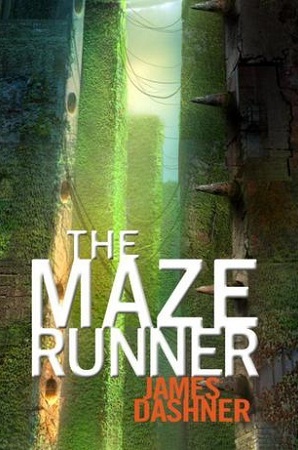
The Maze Runner

by James Dashner
374 pgs  (The Maze Runner series #1)

I know I’ve said this before, but one of the reasons I’m a big fan of good science fiction stories is I enjoy the sense of disorientation I usually experience as they begin. Oftentimes it takes a while to figure out, or get a sense for several key aspects of the story: When and where is it taking place? Is it here on earth? Or another world? Is it happening in the present time on some faraway planet? Or is it happening here on earth, but at some point in the distant future? Many of the really good stories in the genre prolong that sense of disorientation almost indefinitely. So after watching the movie adaptation of the first book in the series, and having questions throughout about what was going on and why, I decided the series might be worth reading.

I wasn’t disappointed. The premise is pretty solid. A group of teenage boys live in a place called the Glade, surrounded by an enormous maze of concrete walls a mile high. The boys arrived in the Glade one at a time, with no memory of their life to that point and no idea why they’re there and how to escape through the maze. About once a week an elevator box surfaces in the Glade containing necessities like food and tools, and about once a month, a new boy arrives in the box as well.
The story begins with Thomas’s arrival in the Glade. Like the others before him, Thomas doesn’t know who he is, or how he got to the Glade, he just woke up in the elevator box as it was surfacing. He quickly learns that the Glade is run by Alby and Newt, two boys who arrived a couple years ago. He learns that ever since boys started finding themselves in the Glade, they’ve been trying to discover why they’re there and how they can escape. They’ve assigned certain boys to be “runners,” assigned to enter the maze every morning and try to find a way through. The problem is that strange and deadly creatures known as Grievers patrol the interior of the maze, and every night, the entrance to the maze closes, and the interior walls of the maze move into different positions.

But Thomas’s arrival seems to indicate that things are about to change in the Glade. One day after his arrival the box appears again, this time there’s a teenage girl in the box along with a message that she’s the last one. Thomas recognizes the girl, but can’t remember her name. She’s in a coma, but begins communicating with him telepathically in his head. A short time later, the sun disappears, the deliveries of supplies stop coming, and the entrance to the maze stays open overnight.

It’s clear to Thomas that he and the girl Teresa are different from the rest of the boys and they’re somehow meant to lead the rest of the group safely through the maze to whatever lies beyond.

I enjoyed the book, more so than the movie. It’s written for young adults, but it’s not dumbed down, which sometimes authors in the genre tend to do. It poses many more questions than it answers, in fact I’m not sure any questions were ever answered. But that’s what the first book in a series like this is meant to do, hook you into wondering what’s going on, and getting you willing to wait for the next book to see what happens next. 

★ ★ ★ ☆ ☆

Monday, April 25, 2016

Alight

by Scott Sigler
424 pgs  (The Generations trilogy #2)

In Alive, the first book in Scott Sigler's new dystopian trilogy, we were introduced to Em, the young heroine who wakes up in a coffin-like container with no memories of who she is, where she's at, or how she came to be there. She frees herself from the coffin and takes charge of a group of other teenagers, all waking up in a similar state of amnesia, to safety down to the planet of Omeyocan.

As Alight begins, and as Em and the others begin to explore the new world they're on, they're faced with immediate threats to their survival, both externally, and from within their own group. They find that all possible food sources are contaminated with a poisonous mold, and there are some in the group who are set on undermining Em's authority at any cost.

As much as I enjoyed Alive, Alight is an even better book. Sigler knows how to move the story along at a quick pace, and he keeps things interesting as he does. One of the things I enjoy about books written for a little younger audience, like these are, is that they get written faster than most books. Alight just came out, and the last book in the series, Alone comes out later this year.

★ ★ ★ ☆ ☆

Friday, March 11, 2016

Calamity

by Brandon Sanderson
417 pgs  (The Reckoners series #4)

Twelve years ago, Calamity, a High Epic, suddenly appeared as a red light in the atmosphere high above the earth. His arrival ushered in the age of the Epics. Hundreds of humans suddenly gained superhuman powers, and within a short time, those powers corrupted their possessors. They became known as Epics, and they used their new powers to kill, enslave, and destroy anything, or anyone that stood in their way.

The story began in Steelheart, with young David Charleston witnessing the death of his father at the hands of Steelheart, a particularly ruthless epic that ruled the city once known as Chicago. David saw something else that day that shaped the course of the rest of his life--he saw Steelheart bleed. The Epics had weaknesses. If he could discover what each of them was, maybe he could destroy them and return things to the way they once were.

The rest of Steelheart, and the next book, Firefight, tells how David joins a small group known as the Reckoners, whose purpose is to destroy the Epics, one by one.

In this final installment, the stakes are as high as they can get. Prof, the former leader of the Reckoners has become corrupted by his powers and if David can't find a way to bring him back, everything he's worked for his entire life will be for nothing.

Sanderson wrote The Reckoners series primarily for younger readers, but that shouldn't discourage adult fans from reading it. The series is smart, funny, and is packed with high-speed action sequences that are becoming a trademark of Sanderson's writing, regardless of which of his various series he's writing. Calamity gives the series the ending it deserves. It's very enjoyable and further justification for why he's steadily becoming a standout among writers of the genre.

★ ★ ★ ★ ☆