Showing posts with label Short Stories. Show all posts

Monday, January 27, 2020

Full Throttle

by Joe Hill
480 pgs

Full Throttle, the most recent offering from Joe Hill, is a collection of twisted, unsettling, and sometimes shocking stories from a writer who is obviously following in his father's footprints, but is doing so with his own style and voice.

A couple of the stories: Throttle and In the Tall Grass, were coauthored with his father, Stephen King. But as big a fan as I am of King, and as good as those two stories are, they weren't my favorite ones in the collection. Throttle was inspired by the story Duel by Richard Matheson, which was adapted into a movie by an up-and-coming Steven Spielberg many years ago. Into the Tall Grass is about two siblings who wander into a field of grass too high to see over and quickly learn they've entered a strange and savage world none have ever escaped from. You are Released (my favorite), is about the passengers on a commercial airplane who find out mid-flight that nuclear war has broken out while they've been in the air.

There are ten other noteworthy stories in the book that I'm not going to say anything about, but that are each well worth the hour or so it takes to read them. They're not the kind of stories that can be forgotten soon after reading.

I became a fan of Stephen King's shorter stories very early on in my discovery of his writing, and I still get a little extra excited when he publishes another collection of them. So, I'm happy to see a similar pattern with Hill, and I hope he follows the example he's been given and continues to write them and compile them every time he has enough.

★ ★ ★ ★ ☆

Monday, July 1, 2019

Wait for Signs

by Craig Johnson
183 pgs  (Longmire Series)

Every Christmas Eve, Craig Johnson writes a short story featuring Walt Longmire that he gives away for free as a Christmas gift for his readers. Wait for Signs is a collection of those stories so far.

Some of the stories are minor mysteries, just on a smaller scale than the ones Walt tackles in the full-length novels, and some of them simply offer short scenes from his past, that provide a little more of the background of his life and relationship with his deceased wife. Either way, they're fun and enjoyable, and worth reading for anyone who watched the series, or reads the books.

★ ★ ★ ☆ ☆

Saturday, June 9, 2018

Uncommon Type - Some Stories

by Tom Hanks
403 pgs

Who knew Tom Hanks was a writer? I didn't. I guess it makes sense though. As an actor and a director, telling stories is what he's been doing for years. Why not write them as well?

Uncommon Type is a collection of short stories written by Hanks that all share a common element or theme: an old-fashioned typewriter. Typewriters make appearances in each of the stories. Sometimes it's a small cameo, other times the typewriter is a major character in the story. But it's always one of those old, built-to-last-forever machines for which Hanks must possess a strong feeling of nostalgia for.

The stories in Uncommon Type are each heartfelt and charming, two words I don't think I've ever used individually, let alone in the same sentence together. But that's really the best way to describe them. Take the story "The Past is Important to Us" for example. It's a story about a wealthy man living in 2027 who repeatedly travels back in time to 1939, so he can bump into a beautiful woman wearing a green dress at the New York World's Fair over and over again, despite the risks to his own life each time he goes.

Or "Christmas Eve 1953," which is about a WWII veteran who lost most of one of his legs and hands in the war, but whose experiences in the war have made him that much more grateful for the wife and family he now gets to enjoy now that he's safe at home.

Tom Hanks is a pretty good writer. He's not as good at writing as he is at acting, but still, I was impressed. I'd be interested to see what he could pull off with a full-length novel.

★ ★ ★ ☆ ☆

Thursday, December 7, 2017

Robot Uprisings

Anthology
476 pgs

Robot Uprisings is an anthology of short stories forewarning the eventual robot uprising, when the robots mankind has intentionally created in an effort to make life easier and more comfortable finally decide enough is enough. The stories were assembled by Daniel H. Wilson and John Joseph Adams, and while each is independent from the others, they all have their origins in real life technology.

Scott Sigler, Ernest Cline, and Daniel Wilson were the authors whose stories initially drew my attention to the book. But their stories, which didn’t disappoint, weren’t the only ones I ended up enjoying. Seanan McGuire’s story “Misfit Toys,” about the abduction of the world’s children by their smart toys one night, was one of several others I enjoyed just as much, and one I’m not likely to forget anytime soon.

Overall, I enjoyed the collection of stories included, and If the goal of the authors was to make their reader pause and question the wisdom of automating so many aspects of our daily lives, they each succeeded. My wife and I might want to rethink the discussions we’ve had recently about buying a Rumba. 

★ ★ ★ ☆ ☆

Saturday, May 13, 2017

Blue World

by Robert McCammon
425 pgs

Blue World by Robert McCammon is a collection of mostly short stories, with the exception of a couple of considerably longer story, including the one which shares the same title as the book itself.

It includes a story about a thief, who steals an old makeup case used in old Hollywood horror stories, and who quickly discovers the makeup has the power to transform the wearer. There’s a story about a man who wakes up one morning and finds the skeleton of his wife lying next to him. There’s a great story of a small town with a unique ritual which takes place every Halloween night. And another of an old man who used to play the role of a super hero in the old serial movies, who decides to dust off his old costume in order to hunt down a serial killer. In the final story in the collection, McCammon tips his hat to Ray Bradbury with a futuristic story dystopian story of a woman who finds comfort through Bradbury’s short stories.

Most of the stories were written back in the ‘80s and first published as a collection back then. The Subterranean Press edition, which came out in 2015, includes three newer stories and are new to the book itself. The evolution of McCammon’s writing style and ability is evident when you compare those last three stories to the rest. The older ones are pretty typical of the genre back then. They’re a little unsettling or they make you feel uneasy, while the newer evoke deeper emotions. They’ve got elements of the supernatural, but they deal with the sense of loss and the emotions which accompany it. I enjoyed them all, but felt like those last three are much more indicative of the type of writer McCammon has become.

★ ★ ★ ☆ ☆

Monday, April 3, 2017

Driving Blind

by Ray Bradbury
259 pgs

It’d been a long time since I read anything by Ray Bradbury. Probably because, since there’s not much left by him to read and there are no more stories to come, I’ve been rationing. I fell in love with Bradbury from reading his stories in the science fiction, horror, and fantasy genres. The Martian Chronicles, Fahrenheit 451, and Something Wicked This Way Comes are three of my all-time favorite books. But later on, I became aware of his works like Dandelion Wine and his stories that could be described as fictional memoirs, stories that either don’t contain any elements of science fiction or the supernatural, or that do so very subtly. These types of stories are just as entertaining and memorable. The 21 stories in Driving Blind generally fall into this later grouping.

Most of the stories have an element of romance in them. One tale is of an old spinster whose saved love letters were stolen from her home by the man who wrote them, and then resent to her one by one in an effort for a second chance. One is of a man who wonder what became of his first love. But when he tracks her down and knocks on her door, he discovers time has not been kind to her and so pretends to be a salesman. There’s a story about a pitiful one-ring circus in a small Mexican border town and one of a dead man searching for mourners.

Each story is only about ten pages long, but in those few pages, Bradbury--as few authors would be able to do--crafts a story deep with emotions, which offers a touching snapshot of humanity. This is not the book I would use to introduce someone to Ray Bradbury, but for those who know and enjoy his style of storytelling, this one is worth the read.

★ ★ ★ ☆ ☆

Sunday, March 19, 2017

Arcanum Unbounded: The Cosmere Collection

by Brandon Sanderson
672 pgs


Brandon Sanderson is such a prolific writer, so much so, that at times it can feel like a challenge trying to keep up with all the different series he’s writing. Fortunately, they’re all great, so it’s a good challenge to face. But the challenge became even more daunting for me a few years ago when I learned of the Cosmere, the universe within which all of his stories take place. The Cosmere contains multiple solar systems and his different series take place in the different systems. When Sanderson began to include more details about the Cosmere, and the fact that the different systems were connected to each other, and that there were ways one could travel from one to the other, I realized that I needed to be paying closer attention as I read his books. Now I was no longer content to simply read his books for pleasure, now I needed to be watchful for references and clues to the bigger picture Sanderson has begun to reveal.

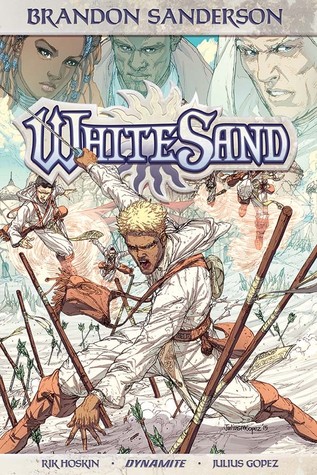
There’s the Selish System, where Elantris and The Emperor’s Soul take place, the Scadrian System, where his Mistborn series take place, the Taldain System, a system introduced for the first time in this book with White Sand, the Threnodite System, where Shadows for Silence in the Forests of Hell takes place, the Drominad System, where Sixth of Dusk occurs, and the Rosharan System, where his most ambitions series (Stormlight) occurs.

Arcanum Unbounded: The Cosmere Collection is a collection of shorter fiction, with stories taking place throughout the Cosmere, in which Sanderson begins to reveal a little more of the interconnectedness between the different systems he's created, and he gives his readers a better idea of what's to come in the many years and books ahead. 

★ ★ ★ ★ ☆

Tuesday, January 5, 2016

The Bazaar of Bad Dreams

by Stephen King
495 pgs

It's been about seven years since Stephen King last published a collection of his short stories--and it's about time. I'm not the type of person who reads his short stories as they come out individually in their various forms (i.e., magazines, e-stories, etc.) so it's always nice when he's written enough of them to warrant putting them together in one book for publishing. Once again, King doesn't disappoint.

The Bazaar of Bad Dreams consists of 18 stories and two poems. They include Mile 81, a classic King-type story of an abandoned car at a highway rest stop that captures and devours anyone who comes in contact with it. Morality, a Faustian story of a young couple and a wealthy man who makes them an unusual offer that has unexpected and dire consequences. Ur, a Dark Tower story (nothing more needs to be said). Obits, a story of an online obituary writer who discovers his obituaries possess a power too tempting not to use. And a post-apocalyptic story of two men and a dog, living out their last days while the world itself is on its last breath.

There are several other stories in the book, and they're all strong stories, but these were the ones that really stuck out and were hard to forget. Fans of King will enjoy the collection.

★ ★ ★ ★ ☆

Thursday, May 14, 2015

Letting Loose the Hounds

by Brady Udall
221 pgs

Before he wrote The Lonely Polygamist or The Miracle Life of Edgar Mint Brady Udall published this collection of short stories. The book contains 11 stories which take place in Arizona, Utah, Colorado, and other western states. Most of them involve main characters who have experienced some significant loss in their lives, from death and divorce, to addiction and depression. But several of the stories take place after the loss has occurred, when they're at a pivotal moment in their journey back and are faced with the decision of which way the rest of their life is going to go.

There wasn't a story in the collection that I didn't enjoy, but my favorites were the title story and Midnight Raid. The first is about a man named Goody Yates, who is picked up while wandering deliriously along the side of the road immediately after having his wisdom teeth extracted by the dentist. The man takes him back to his own house while he tries to find out who he is and what's wrong with him. While Goody recuperates at the man's house, he learns that the man's wife recently left him for another man and that the man has plans to burn his house down before skipping town to start a new life. Goody also learns that the man has a couple dozen hunting dogs out back that haven't been fed for three days. You might be able to guess where that one's going.

Midnight Raid is about a Jerry, a tall Apache who is sneaking into a house carrying a pygmy goat in his arms. The home belongs to the man who married Jerry's ex-wife and it's where his young son now lives. His son has written to Jerry and told him how much he misses his pet goat and Jerry is determined to turn his life around and to be a better man and father . . . and the first thing he must do is give his son a goat.

Most of the stories have humorous undertones, some of them shine a light on the ridiculousness that can exist in peoples' lives, but all of them are enjoyable and are likely to strike an emotional chord.

★ ★ ★ ★ ☆

Friday, March 13, 2015

Trigger Warning: Short Fictions and Disturbances

by Neil Gaiman
310 pgs

I always get excited when an author I enjoy puts out a collection of their short stories. Since I rarely read anthologies or the magazines where these stories are first published, they're almost always new to me. I'm also a big fan of the short-story format itself. I love the fact that there's no character development or backstory that needs to take place. There's also very little plotting or the slow build up of suspense. It's just a quick and hopefully captivating moment in time that the author delivers in 10 or so pages. Neil Gaiman is one of the best at accomplishing this well. In fact, his short stories usually tend to stay with me even longer than his novels do.

Trigger Warning is Gaiman's third collection of his short stories, and like the previous two, in it he offers up a strange and category-defying assortment of stories, along with a few poems he describes as "free bonuses." Among the stories is a retelling of the story of Sleeping Beauty, a Doctor Who story, a return to the world of American Gods, a fantastic story of an "uninventor," who makes the world a better place by uninventing the things that the world would be better off without, and my personal favorite in the book, a story he wrote as a birthday present for Ray Bradbury.

Each story is worth reading, and every one of them is unmistakably Gaiman. The man can do no wrong.

★ ★ ★ ★ ☆

Wednesday, July 23, 2014

Trouble in Mind

by Jeffery Deaver
479 pgs

I enjoy a good short story. I like the fact that I find myself thrown into a story mid-action, and in most cases, hanging on for a quick, and hopefully entertaining ride. Authors who are good at writing them have the ability to get you emotionally invested in the character quickly, without provide much, if any, of their life's backstory. Ray Bradbury and Stephen King are two of the best at writing them. I give Jeffery Deaver high marks as well. A typical book by Deaver is filled with misdirection and surprise twists in the plotline, and his short stories are no different--he just does it at an accelerated pace.

Trouble in Mind is the third collection of Deaver's short stories. And I think it contains some of his best so far. They're all worth the short time it takes to read them, but a couple of them are worth singling out: A Textbook Case is a Lincoln Rhyme story where the perpetrator uses the book Rhymes wrote himself to train detectives on how to find and analyze crime-scene evidence against Rhyme and his team and intentionally leaves as much planted evidence as he can. The Weapon is a very timely story involving a U.S. military interrogator who uses unethical techniques to extract information from his prisoners in order to protect his country from terrorist threats. Finally, Forever involves a string of suspicious suicides committed by elderly individuals and couples who showed no signs of depression beforehand, nor did they seem to have a reason to end their lives.

As a whole, Trouble in Mind is worth reading. Deaver branches out a little from his standard crime mystery format in some of the stories and pulls it off quite well. The stories quickly engage you and if you're not familiar with Deaver's writing, you'll soon realize that you can't assume while you're reading, that you know where the story is ultimately going to end up.

★ ★ ★ ☆ ☆

Wednesday, February 13, 2013

American Decameron

by Mark Dunn

I assume that Mark Dunn likes to challenge himself as a writer. For him, it doesn’t seem like just writing a great book is enough of one though. He’s got to find a way to tell his story in a way that’s unique, original, and that adds an extra level of enjoyment for those who read it.

With his first and probably most widely read book Ella Minnow Pea, he wrote a story in epistolary form while progressively limiting the letters of the alphabet that he could utilize. With Welcome to Higby he prefaced every chapter of the book with an obscure biblical verse that foreshadowed the contents of the chapter. In Ibid: A Novel he writes a fictitious biography of Blashette, a three-legged circus performer and deodorant salesman. On almost every page of the book Dunn includes footnotes. And the footnotes are what tell the true story Dunn is writing.

With a nod of his head to Giovanni Boccaccio, a 14th century Italian author who wrote Decameron, a book consisting of 100 tales, Dunn uses for the subject of his story, 20th century America. Dunn's 100 tales are independent stories that span the years 1901-2000 with at least one story taking place in every one of the 50 states. In some stories Dunn makes up his characters and has them experience actual historical events. Other times his character were real and the events that took place in their lives truly happened, but the events are very obsure and highly entertaining. Some of the stories are funny, some are tragic, some contain a twist, and many will make you pause and think. But they all bear the qualities of a Mark Dunn tale.

I loved this book and highly recommend it. But it’s not short. With 100 stories averaging 6-7 pages each, the book as a whole is a doorstop. But it’s the type of book you can pick up whenever you have a few minutes of free time and read a complete and entertaining story from start to finish and then go about your day.

★ ★ ★ ★ ★

Friday, December 9, 2011

Minority Report (& Other Stories)

Minority Report (& Other Stories) by Philip K. Dick

During his life, Philip K. Dick didn't have the tremendous following or financial success that some of his contemporary science fiction authors enjoyed (Herbert, Asimov, Heinlein). But he was far more prolific than any of them and has probably seen more posthumous success. His name still doesn't have the same widespread recognition that those others do, but I bet far more people have enjoyed his stories, albeit unknowingly, than all those others combined.

Hollywood finally gave him the recognition that his stories deserved. Blade Runner, Total Recall, Screamers, Imposter, Paycheck, Next, A Scanner Darkly, The Adjustment Bureau, and Minority Report are all adaptations of stories that he wrote, and I'm sure they won't be the last.

This book contained nine of his stories, and they were all great. Minority Report was the first, and while Spielberg took a lot of liberties with his adaptation, it's clear who the best parts of the story came from. I enjoyed the movie a lot, but the 45 page story was better.

Next was Imposter. It's about a man named Spence Olham who is accused of being an alien robot, sent to earth with the mission of taking over the identity of the true Spence Olham in order to detonate a bomb which would destroy the entire planet. A great story that leaves you guessing "is he, or isn't he" until the very end.

Second Variety takes place in the distant future during a war between Russia and North America. The Russian's first strike was an unexpected nuclear attack which left the whole North American continent desolate and forced its survivors to colonize the moon in an effort to retreat and regroup. The Americans retaliated by creating small crab-like robots that were exceptionally intelligent and capable of killing the Russians. But just when the Russians were nearly wiped out, a new variety of robots have begun to appear. Only these ones are indistinguishable from human beings and they don't have an allegiance to either side. They were created by the initial robots unleashed by the Americans and now the hole human race is their target.

War Game is about Wiseman, a man who works as a toy inspector for a company responsible for testing and monitoring toys imported to Terra. Terra is on the brink of war with Ganymeda and is therefore worried about possible threats that might slip through its defenses disguised as harmless imports. Three toys have come in for consideration, a toy soldier game where the soldiers attempt to attack and take control of a citadel, a virtual reality suit that causes its wearer to see and feel places from their past, and a Monopoly-like board game called Syndrome. It’s a red herring story that illustrates the best way to take down an enemy.

In What the Dead Men Say, after a person dies, there is a period of time called half-life in which they can be resurrected. Half-life is finite, so the longer they stay resurrected, the sooner their half-life is used up. A person who is resurrected for only brief periods at a time, can stretch their half-life to span centuries. This was both the longest and weakest of the nine stories in the book. But it still offered an interesting premise.

Oh, to Be a Blobel! takes place after the inter-species war between humans and blobels. Blobels are an interstellar species of very large, single-celled amoeba-type beings. During the war, soldiers from both species underwent physiological changes that allowed them to become a member of the enemy species in order to conduct acts of espionage. Now that the war is over, some of those soldiers are unable to revert permanently to their original species and are left living lives split between the two - a part of each day they're human, the rest blobel. (Dick wrote during the '60s and took advantage of the drug induced lifestyle that existed then, so that might explain some things.)

The Electric Ant is about a highly advanced robot named Poole. Poole has biological skin, flesh, and blood, so he's totally indistinguishable from a human being by all outward appearances. He communicates just like a human being and feels and shows emotions just like one as well. He also thinks like one too. In fact, Poole has no idea that he's not human. It's not till he's in an accident and looses his hand that the truth is revealed. When he realizes that, he also realizes that every aspect of his life has been a direct result of his programming. "Programmed. In me somewhere, he thought, there is a matrix fitted in place, a grid screen that cuts me off from certain thoughts, certain actions. And forces me into others. I am not free. I never was, but now I know it; that makes it different." So Poole becomes determined to locate his internal programming to see if he can disconnect it and finally begin to experience the real world.

Faith of Our Fathers is about Tung Chien, a Vietnamese man living in a time when communist China has control of the whole world. What no one realizes is that they're maintaining their control over the world's population by contaminating the water and food supplies with hallucinogenic drugs. These drugs prohibit people from seeing the leader of the ruling party for what he truly is - a being from another planet that is feeding on every living thing.

We Can Remember it for you Wholesale was probably my favorite story in the book. It's one of the shortest ones and instead of summarizing it I think it's enough to say it's what the movie Total Recall is based on.

★ ★ ★ ☆ ☆