Showing posts with label Dystopian Fiction. Show all posts

Thursday, August 27, 2020

The Drowned Cities

 by Paolo Bacigalupi

434 pgs  (Ship Breaker series #2)

Set in the same war-torn version of the world he created in Ship Breaker, Paolo Bacigalupi's The Drowned Cities--while not a sequel--further builds on the dystopian reality now facing humanity, along with the genetically engineered monsters it has created.

The book begins in a dark prison cell, where Tool, a killing machine created from tiger, dog, hyena, and human genes, has been kept and tortured. The guards believe the creature has finally died, but when one of the unlocks the gate to enter, Tool escapes in a whirlwind of death and carnage that takes mere seconds to complete.

Mahlia is a teenage girl who was orphaned by the war several years ago. She now scrapes by an existence working as a medic, scavenging what little medicines remain and using them to treat freedom fighters in the ongoing war between the factions. Her life was once saved by a man she calls Mouse, and the two have looked out for one another ever since.

When together they come across Tool, unconscious again and near death from multiple wounds, Mahlia recognizes an opportunity to possibly escape The Drowned Cities and the war once and for all.

The Drowned Cities is a dystopian book written for slightly younger readers, but don't let that lead you to assume the dystopian elements of the story have been watered down to make them more palatable for teenagers. Bacigalupi's story is just as dark, violent, and hopeless as McCarthy's The Road, although I can't imagine McCarthy would have considered adding a tiger-dog-hyena-human hybrid as one of the main characters.

★ ★ ★ ☆ ☆

Sunday, September 29, 2019

Wanderers

by Chuck Wendig
782 pgs

When I hear a book is being compared to The Stand, and favorably no less, I have to check it out. In the case of Chuck Wendig's new book Wanderers, I'm really glad I did. There's just something about a good post-apocalyptic, dystopian story that makes me happy for some reason. So, I'm always excited when a good one comes around.

The story begins when Shanna, a 17-year-old girl, wakes up to find her young sister Nessie is missing from her bed. That in and of itself isn't unusual or alarming, but when she finds Nessie a few minutes later, just how unusual and alarming the situation is, quickly becomes apparent. She finds Nessie walking alongside the road outside the house, barefoot adn unresponsive. At first, she thinks Nessie is merely sleepwalking, but when nothing she does will wake her, and when her attempts to physically stop her and take her back to the house cause Nessie to scream, shake violently, and act as if she's about to explode--literally, Shanna quickly realized something serious is going on.

By the time she goes back, wakes her father, adn the two of them catch back up to Nessie, she's wandered even further away from the house, and still shows no sign of waking nor stopping. Within a few minutes, Mr. Blamire, Shanna's math teacher, walks out of the morning mist along side of the road and approaches Nessie. Shanna can tell he's in the same state Nessie's in, adn when he gets to her, he turns direction and begins slowly walking right behind her. Gradually others join the group one by one, usually being followed by frantic family members or friends trying to "wake" them with the same results Shanna had. It doesn't take long for the local news to get word of the strange phenomena, and very soon, the "sleepwalkers" become a national headline.

Right around this same time, the CDC identifies a strange and deadly new fungal disease. The disease infects the host's brain, initially causing cold-like symptoms, but within weeks, the person begins experiencing hallucinations, often leading to suicide. Eventually the person dies and his or her whole body releases millions of spores into the air, potentially infecting thousands more.

As the story goes on and the group of sleepwalkers and their shepherds continues to grow mile after mile, Wendig gradually and expertly lays out the scope and magnitude of the story he's telling. Government agencies become involved, along with religious zealots and white supremacists. All trying to figure out what's going on, whether it's the apocalypse, and what ethnic group is to blame for it, respectively.

I had never heard of Chuck Wendig before seeing this book at the bookstore, so I didn't know what to expect, but I was very impressed. The story is fantastic, and his characters are well developed. A lot of books this big take a few hundred pages to build up and set the stage before they set their hook. That's not the case with Wanderers. The story grabbed me right from page one, and it didn't let up until the end.

★ ★ ★ ★ ★

Wednesday, March 14, 2018

Borne

by Jeff Vandermeer
323 pgs

Jeff Vandermeer’s Borne is one of the stranger books among those in the dystopian fiction genre. It’s narrated by Rachel, a 28-year-old who lives with Wick in an old apartment building, filled with booby traps and disguised as a refuse heap. Rachel spends her days scavenging for scraps of food and supplies throughout the destroyed city they live in. She and Wick also live their lives hiding from Mord, a bear the size of a department store…who can fly.

One day, while scavenging, Rachel comes across a dark purple object about the size of her fist, and takes it back to her and Wick’s apartment. The object resembles a cross between a squid and a sea anemone. It can change color, starts to grow, begins to move, and one day…begins to speak. Rachel names it Borne and begins treating it like a pet. But Wick is suspicious of Borne. Small objects and even animals begin to disappear and Wick believes Borne is responsible.

He suspects Borne comes from the same place as Mord did, “the Company,” an enigmatic biotech company that filled the world with strange and bizarre products before going silent. But Borne is different than any other biotechnology they’ve come across before. It has the ability to learn and to transform itself into any object, living or non-living at will.

Vandermeer never explains how the world got to the state it’s in when his story starts. Readers should be prepared to have a lot of questions they’ll have go unanswered throughout the story. But if they can avoid getting hung up on those questions, they should enjoy the story for what it is, a bizarre and unsettling story about human and non-human intelligence and how far it could go.

★ ★ ★ ★ ☆

Friday, January 19, 2018

The Fever Code

by James Dashner
344 pgs  (Maze Runner series #5)

The Fever Code is presumably the final installment in James Dashner’s “Maze Runner” series. While it was written last, chronologically it’s the second book in the series, bridging the events of The Kill Order and The Maze Runner.

The book introduces five-year-old Stephen, soon to be renamed Thomas by WICKED. Thomas is taken from his family by soldiers from WICKED (World in Catastrophe, Killzone Experiment Department) and taken to their complex, where he meets Teresa, Newt, Minho, Alby, and Chuck. All of them except for Newt are immune to the Flare which has decimated the world’s population, and they’ve been brought to the complex so they can be studied by WICKED and assist them in developing the maze.

The book is the weakest, and thankfully, the last book in the series. It filled in the remaining gaps in the story, but it lacked much by way of surprises and suspense. Admittedly it’s hard to have those in a book which is a prequel to the most popular book in the series. You already know what the ultimate fate of the characters is, and the only reason to read it is to learn more of their backstory.

If you’ve read the previous four books, you’ll want to read this one. But if you haven’t, don’t start with this one. You’re not likely to read the others, if you do.

★ ★ ☆ ☆ ☆

Thursday, November 2, 2017

Swan Song

by Robert McCammon
798 pgs

About seven years ago I read my first book by Robert McCammon: Speaks the Nightbird, and his Matthew Corbett series instantly became a favorite of mine. I subsequently began reading his back catalog and have yet to be disappointed. Even his first few books, which McCammon has said himself are not that great and were the ones he wrote while he was learning how to write, I found were worth the time to read.

Swan Song is one of his earlier books that I was looking forward to the most, but that took me the longest to get around to reading. My wife read it when she was in high school, and knowing that King’s The Stand is my all-time favorite book, would periodically ask me when I was going to read it. But it’s not an easy book to get your hands on in hardcover, so it wasn’t until Subterranean Press got around to issuing it that I finally got my chance.

It’s a fantastic book and was well worth the wait.

At the beginning of the book nuclear war breaks out between the USA and the USSR. When the Soviet bombs land across the country, millions are killed from the initial blasts and the subsequent fallout. Among the survivors are a Sister Creep, a homeless woman in New York City, Josh Hutchins, a giant of a man who used to play in the NFL and most recently toured the country as a professional wrestler, and a nine-year old girl named Swan.

As the story progresses, their paths cross and the three find themselves traveling across the country, being guided by a jewel encrusted ring of glass. Sister found the ring in the ruble of a jewelry store shortly after the bombs fell and it led her to Josh and Swan. But something else knows about the ring and is searching for it, an entity able to take human form that senses the power of the ring feels compelled to destroy it.

Swan Song drew me in immediately. It’s nearly 800 pages long, and while sometimes a book that long would be significantly improved if it were only half as long, that’s not the case with this one. McCammon masterfully paces his story, beginning it with the conflict between two countries, each with the ability to destroy the world, and ending it with the ultimate conflict between good and evil. One side trying to ensure the planet’s opportunity to start over, and the other determined to destroy it completely.

★ ★ ★ ★ ★

Friday, September 8, 2017

The Boy on the Bridge

by M.R. Carey
392 pgs  (The Girl with All the Gifts series #2)

The Boy on the Bridge is a prequel to M.R. Carey’s fantastic book TheGirl with All the Gifts. It tells the story of the Rosalind Franklin, the heavily-armed mobile laboratory that was found abandoned in The Girl with All the Gifts. The Rosalind Franklin was sent out from the city of Beacon on a last-ditch effort to analyze the Cordyceps fungus in order to try to synthesize a cure for the infection turning humans into mindless “hungries.”

The crew consists of ten members, half of them military personnel, the other half, scientists. Included among the scientists is 15-year-old Stephen Greaves, the scientific genius responsible for developing the chemical blocker that prevents hungries from picking up the scent of the uninfected. Greaves is a prodigy, and while it’s never confirmed in the book, he’s also clearly autistic. He can’t stand to be touched by others, is seemingly incapable of telling an untruth, and he deals with everything around him like it’s a scientific puzzle waiting to be solved.

I’m not going to say anything about the plot, since doing so would spoil too much of the story of both books. If you’ve read The Girl with All the Gifts—and even though this is a prequel to that one, you should still read that one first--, much of the plot of this one is going to be a foregone conclusion before you even start reading. Even though that’s the case, The Boy on the Bridge is still well worth the time to read. Carey is a fantastic story teller! His characters are three-dimensional and the story he places them in are compelling and wholly entertaining.

★ ★ ★ ★ ☆

Thursday, September 7, 2017

The Kill Order

by James Dashner
327 pgs  (Maze Runner series #4)

The Kill Order is the first of two prequels to James Dashner’s Maze Runner trilogy. Set 13 years before Thomas arrived in the Maze, the book tells the story of Mark, Alec, Trina, and a small group of others who survived the solar flares that nearly wiped out humanity. But the survivors are far from safe, a new virus has begun spreading, one that turns those who catch it into raving, murderous, creatures.

The story doesn’t waste any time getting started. Mark, Alec, and the others in their small group live in a small village in the mountains of North Carolina. As they’re together, they hear the engine noises of a Berg approaching. When it arrives, it hovers over their village, the side doors open, and men wearing uniforms begin to shoot at them with darts. Mark and Alec are able to board the Berg and discover a box with a biohazard symbol on it containing 24 darts holding the Flare virus. As the story unfolds, Mark and Alec realize that some who are infected with the Flare are immune to its effects.

Who is intentionally infecting people with the Flare? And why? How are some people immune to its effects? Does that mean there’s cure possible?

The Kill Order is a solid addition to Dashner’s series. It sheds some light on some of the mysteries of the first three books, but leaves plenty of things unanswered. Enough to fill one more book.

★ ★ ★ ☆ ☆

Tuesday, August 15, 2017

Ship Breaker

by Paolo Bacigalupi
323 pgs  (Ship Breaker series #1)

One of my favorite authors, Dan Simmons, once said, “I believe that almost every writer has at least one dystopian novel in him or her that’s clawing and scratching to get out.” I mention this by way of justification, since I feel like the phrase “young adult dystopian fiction,” which I’m about to use again, can be found in an inordinate number of my book reviews recently, and I don’t think of myself as a big YA dystopian fiction fan. I just happen to like a lot of different authors…who happen to be letting their dystopian book claw its way out right now, and they happen to be writing it to a YA audience.

Paolo Bacigalupi’s Ship Breaker is the first in his young adult dystopian fiction series. It takes place about 100 years into the future, and is set along the Gulf Coast after the ice caps have melted, the ocean levels have risen to drown cities like Houston and New Orleans, the government has broken down, and the gulf between the “haves” and the “have nots” has grown exponentially.

Nailer is a teenage ship breaker. He works on a crew salvaging valuable materials off of now-defunct oil tankers. His father is an abusive and murderous drug addict, his mother is dead, and Nailer is barely able to survive from day to day. The only way things will ever change for him is if he comes across a Lucky Strike, a piece of jewelry, a barrel of oil, or anything else that would allow him to buy his way out of his current station.

His Lucky Strike may have finally arrived when Nailer comes across a wrecked luxury ship the day after a hurricane. The lone survivor is a teenage girl, the uber-rich daughter of one of the richest men left in the world. Nita is in terrible danger and Nailer finds himself caught between letting her die and claiming the ship and all its valuables as his, or rescuing her and risking spending the rest of his life slaving away on tankers.

I became a fan of Bacigalupi when I read The Water Knife a few months ago. That book impressed me with the way he took the problems of today, and followed them to a logical and dismal future, if left unchanged. He does the same thing, only for a potentially younger audience with Ship Breaker. It’s an intelligent and compelling start to a series and I’m looking forward to what comes next. 

★ ★ ★ ☆ ☆

Thursday, August 3, 2017

The Girl with All the Gifts

by M.R. Carey
403 pgs  (The Girl with All the Gifts series #1)

Melanie is a highly-intelligent 10-year-old girl, who wakes up every morning in a military prison cell. Before the guards, who come every morning to take her to class, will enter her cell, she’s instructed to sit in a wheelchair and not move. When she does, guards enter her cell, and while one of them keeps his gun pointed at her, two others strap her wrists and ankles to the chair and place a muzzle securely over her face. She’s then taken to class, where she joins 20 or so other similarly-restrained children, and learns to read, do math, and listens to stories about the world outside her cell, a world she has no memories of. But the world outside her cell is nothing like the stories she’s told. That’s because twenty years ago, the zombie apocalypse took place.

The world is now full of “hungries,” humans who wander aimlessly around until they pick up the scent of an uninfected. When that happens, they turn into ravenous monsters, who will pursue their prey until they catch them and feed. But Melanie and the other children at the military base are different from the rest of the hungries. For some reason, when they became infected, their brain didn’t stopped working. They’re just like everyone else, until they pick up the scent of an uninfected. It’s only then that they temporarily become feral monsters, hence the muzzles and restraints.

I don’t want to give any more of the story away. If it was a bad story, I wouldn’t hesitate. But this is far from a bad story. It was surprisingly fantastic. Despite the proliferation of zombie stories in the media today, M.R. Carey has successfully managed to write one that is refreshing and unique. It’s character driven, and mostly by the character of young Melanie, a zombie.

★ ★ ★ ★ ☆ 

Saturday, April 29, 2017

Alone

by Scott Sigler
539 pgs  (The Generations trilogy #3)

Alone concludes Scott Sigler’s The Generations trilogy, a trilogy that got off to an excellent start with Alive, but which gradually lost some of its momentum and appeal for me by the time it was all over.

Em, along with the remaining Birthday Children, who woke up with no memories on a ghost ship traveling through space, have finally found refuge on Omeyocan, the distant planet their creators genetically engineered them to survive on and sent them to thousands of years ago. Em united the different groups that had formed after everyone woke up. She’s led them in their fight to survive on Omeyocan. She’s helped them fend off their creators, who sent them there so they could “overwrite” their consciousnesses and take over their young healthy bodies once they had arrived. She’s helped them establish peace with the indigenous species on Omeyocan, and now…it’s all being threatened. They’ve learned other alien races are on their way to Omeyocan as well, drawn by the same message the Birthday Children’s creators received thousands of years ago. Each of those alien races shares the same intent to conquer Omeyocan and call it their own. Em has to find a way to protect her small group and make sure everything they’ve survived so far hasn’t been for nothing.

The series began with such a great first book. I’ll admit the idea seems more than a little derivative of The Maze Runner, but Sigler still pulled it off so well. The idea was compelling and left me at the end of the first book with a lot of excitement over what was to come. The last two books were interesting and entertaining, but I was a little let down. 

★ ★ ★ ☆ ☆

Wednesday, December 28, 2016

The Death Cure

by James Dashner
327 pgs  (The Maze Runner series #3)

The Death Cure is the third book in James Dashner's The Maze Runner series. It picks up the story shortly after The Scorch Trials ended. Thomas is being held in isolation by WICKED and he's still unsure whether he can trust Teresa, who believes what they're being told, that "WICKED is good."

When he's finally released and allowed to rejoin the other Gladers and members from Group B, they're all told by Assistant Director Janson that a cure for the Flare exists and that not everyone in their groups is immune. WICKED once again needs their help obtaining the cure...before it's too late for their friends.

The Death Cure is essentially the end of a trilogy. There are two more books in the series, but they're both prequels to the events of these three. And while I plan to read the prequels, I wasn't very impressed with Dashner's conclusion. There's plenty of action and he answers most of the questions that led up to this book, but I thought things ended in a cliche. There's a lot of dystopian fiction out there, and much of it is written for younger readers, like this is. So Dashner would have done himself (and me) a favor by separating himself form the others with a more unique conclusion.

★ ★ ☆ ☆ ☆

Friday, October 7, 2016

The Fireman

by Joe Hill
752 pgs

I remember reading somewhere once that every great author has a post-apocalyptic novel in them. I don't know whether it's true or not, but I hope it is. There's something about a story of survival after most of the rest of the world has perished that appeals to me. My favorite book of all time is one, and happens to have been written by Hill's father.

The Fireman is Joe Hill's contribution to the genre, and it's a noteworthy one. In Hill's story--like his father's--it's a plague that decimates the world's population, a plague that leaves its victims covered in gold-and-black tattoo markings and eventually results in death by spontaneous combustion.

Harper Grayson is a young nurse who lives in New England. She works in a hospital trying to treat patients infected with Dragonscale, as the infection has become known. One day while working, an injured young boy is rushed to the hospital by an anxious fireman. And while the fireman argues with the hospital staff about admitting the young boy, Harper witness the fireman begin to give off smoke, like he's about to bursts into flame. But as she watches, she realizes he's found a way to control the virus, and the smoking subsides. She soon learns that the fireman has not only learned how to prevent the virus from killing him, but he's also learned how to master and control the fire that's literally burning within him.

Joe Hill does a great job of telling his story against the backdrop of this one-of-a-kind plague. He creates a cast of memorable and likeable characters, and for over 700 pages, keeps you on edge, not knowing which one of them will become a pile of ashes before the end of the page.

★ ★ ★ ★ ☆

Tuesday, August 16, 2016

The Scorch Trials

by James Dashner
384 pgs  (The Maze Runner series #2)

The Scorch Trials picks up right where The Maze Runner ends. Thomas, and the remaining “Gladers” have escaped The Maze and have been taken to a facility by their rescuers. There they meet members from other groups and learn that theirs wasn’t the only maze, and that other groups were being put through the same tests as they’ve been. While there they learn about “the Flare,” a plague that eventually turns the infected into aggressive zombie-like creatures known as Cranks. The Flare has spread throughout the world and lead to the formation of WICKED, a group of scientists tasked with finding a cure. Thomas and the others are told that they, and the experiments they’ve been subjected to, are an integral part of WICKED’s search for a cure.

Shortly after arriving at the facility, a group of Cranks attacks the facility and Thomas and others are forced to flee. They meet up with a scientist from WICKED who informs them that they’ve all been infected by the Flare and now have to pass a second test. They have to successfully cross the Scorch within the next two weeks, where they will be given an experimental cure.

James Dashner successfully maintains the same level of excitement and mystery in The Scorch Trials that he established in The Maze Runner. It’s clear he’s not planning to reveal too much too soon. But rather, he seems intent to slowly reveal what is really going on with WICKED throughout the series. Overall I enjoyed the book, and plan to pick up The Death Cure soon. 

★ ★ ★ ☆ ☆

Wednesday, June 15, 2016

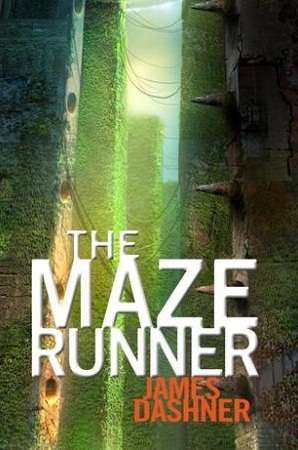
The Maze Runner

by James Dashner
374 pgs  (The Maze Runner series #1)

I know I’ve said this before, but one of the reasons I’m a big fan of good science fiction stories is I enjoy the sense of disorientation I usually experience as they begin. Oftentimes it takes a while to figure out, or get a sense for several key aspects of the story: When and where is it taking place? Is it here on earth? Or another world? Is it happening in the present time on some faraway planet? Or is it happening here on earth, but at some point in the distant future? Many of the really good stories in the genre prolong that sense of disorientation almost indefinitely. So after watching the movie adaptation of the first book in the series, and having questions throughout about what was going on and why, I decided the series might be worth reading.

I wasn’t disappointed. The premise is pretty solid. A group of teenage boys live in a place called the Glade, surrounded by an enormous maze of concrete walls a mile high. The boys arrived in the Glade one at a time, with no memory of their life to that point and no idea why they’re there and how to escape through the maze. About once a week an elevator box surfaces in the Glade containing necessities like food and tools, and about once a month, a new boy arrives in the box as well.
The story begins with Thomas’s arrival in the Glade. Like the others before him, Thomas doesn’t know who he is, or how he got to the Glade, he just woke up in the elevator box as it was surfacing. He quickly learns that the Glade is run by Alby and Newt, two boys who arrived a couple years ago. He learns that ever since boys started finding themselves in the Glade, they’ve been trying to discover why they’re there and how they can escape. They’ve assigned certain boys to be “runners,” assigned to enter the maze every morning and try to find a way through. The problem is that strange and deadly creatures known as Grievers patrol the interior of the maze, and every night, the entrance to the maze closes, and the interior walls of the maze move into different positions.

But Thomas’s arrival seems to indicate that things are about to change in the Glade. One day after his arrival the box appears again, this time there’s a teenage girl in the box along with a message that she’s the last one. Thomas recognizes the girl, but can’t remember her name. She’s in a coma, but begins communicating with him telepathically in his head. A short time later, the sun disappears, the deliveries of supplies stop coming, and the entrance to the maze stays open overnight.

It’s clear to Thomas that he and the girl Teresa are different from the rest of the boys and they’re somehow meant to lead the rest of the group safely through the maze to whatever lies beyond.

I enjoyed the book, more so than the movie. It’s written for young adults, but it’s not dumbed down, which sometimes authors in the genre tend to do. It poses many more questions than it answers, in fact I’m not sure any questions were ever answered. But that’s what the first book in a series like this is meant to do, hook you into wondering what’s going on, and getting you willing to wait for the next book to see what happens next. 

★ ★ ★ ☆ ☆

Monday, April 25, 2016

Alight

by Scott Sigler
424 pgs  (The Generations trilogy #2)

In Alive, the first book in Scott Sigler's new dystopian trilogy, we were introduced to Em, the young heroine who wakes up in a coffin-like container with no memories of who she is, where she's at, or how she came to be there. She frees herself from the coffin and takes charge of a group of other teenagers, all waking up in a similar state of amnesia, to safety down to the planet of Omeyocan.

As Alight begins, and as Em and the others begin to explore the new world they're on, they're faced with immediate threats to their survival, both externally, and from within their own group. They find that all possible food sources are contaminated with a poisonous mold, and there are some in the group who are set on undermining Em's authority at any cost.

As much as I enjoyed Alive, Alight is an even better book. Sigler knows how to move the story along at a quick pace, and he keeps things interesting as he does. One of the things I enjoy about books written for a little younger audience, like these are, is that they get written faster than most books. Alight just came out, and the last book in the series, Alone comes out later this year.

★ ★ ★ ☆ ☆

Wednesday, October 21, 2015

The Border

by Robert McCammon
441 pgs

The Border represents a return by Robert McCammon to the type of books that first made him famous as a writer. As good as his most recent books featuring Matthew Corbett are, most of his earlier writing was dark, scary, and epic in scale.

The book begins two years after most of the world has been destroyed by two different alien races. The Gorgons and Cyphers--as they've become known by the survivors--have been involved in an intergalactic war for ages. Two years ago the frontline of that war moved to earth, and with far inferior technology and weapons, the collective armies of the world were decimated in a matter of hours. As the war raged on, the planet and its inhabitants continued to be poisoned and destroyed, with those able to survive living in hiding and slowly running out of resources.

A small group of survivors in Colorado has almost reached the end of their food and water supplies when they find a teenage boy calling himself Ethan. He's amnesiac and whatever caused his loss of memory has also left him with significant physical injuries. As they take him in and try to discover who he is and where he came from, Ethan begins to exhibit inexplicable powers, and strange symbols begin to appear on his bruised and battered body.

As Ethan continues to transform into something no one can explain, he and those with him begin to realize that he may be the planet's last and only hope for survival, and maybe even the end of the war they never wanted any part of.

I thoroughly enjoyed the story McCammon tells in The Border. The alien races he creates would be right at home in one of his earlier horror novels, and the human characters he creates are easy to care about. It's a good example of a writer who has had decades to sharpen his craft and knows what it takes to tell a story that grabs you, scares you, and entertains you all at the same time.

★ ★ ★ ★ ☆


Monday, August 31, 2015

The Water Knife

by Paolo Bacigalupi
371 pgs

Paolo Bacigalupi's latest book takes place in the American Southwest in the not-too-distant future. Climatic changes have deteriorated to the point where deadly sandstorms in Nevada, Arizona, New Mexico and Utah are now considered the norm, and a long-term drought known as "Big Daddy Drought" has decimated the region's water supply. Water rights have now become the most valuable commodity in the Western states, and a violent war utilizing guerrilla warfare and terrorist tactics has been raging for years between those trying to control them. California has shut down its border in order to protect its water and formed a militia to guard it. Urban areas in Arizona, which has had its water supply shut off, have turned into ghettos inhabited by refugees. Out of desperation, many there resort to trying to hire ruthless "coyotes" to smuggle them across the border of Arizona and into California.

Angel Velazquez is a former gang member turned "water knife," an operative of the Southern Nevada Water Authority who is paid to ensure the ongoing supply of water to Las Vegas, using any means necessary. Angel is sent to Phoenix on an operation to investigate claims being made concerning a new water source, a source that the SNWA wants to ensure it will control. While there, he crosses paths with Lucy Monroe, a journalist who is investigating the violent murder of an associate of hers who had been making claims regarding the new water source in the region.

This is the first book by Bacigalupi that I've read, but it won't be the last. He does an excellent job of telling a story that is both futuristic and dismal, but is rooted in the realities of today. His story is compelling unsettling. It's too easy to see how the world that he describes could become a reality. It's pretty evident that the book has a message about conservation and mankind's obligation to the planet. But the book never comes across as preachy. Bacigalupi uses fear, as opposed to a sermon, to deliver the message.

★ ★ ★ ★ ☆

Tuesday, August 18, 2015

Alive

by Scott Sigler
345 pgs  (The Generations trilogy #1)

I've mentioned this before, but one of the things I really enjoy about science fiction books is that oftentimes you have to read your way through an orientation period. You start out with no idea of what's going on. The setting of the story could be anywhere in the universe; the story could be taking place at any point in time; the characters could be human, alien, or even synthetic. I look forward to and enjoy the time it takes to get my bearings each time, and more often than not, the story that follows is unique, imaginative, and very enjoyable. Scott Sigler's first book in his new trilogy Alive is a great example of what I'm talking about.

The book begins with a teenage girl waking up in a coffin. She doesn't know where she is, how she got there, nor does she even know who she is. Her limbs are restrained and she has to figure out how to free herself and escape from the coffin. When she does, she finds herself in a room that contains several other coffins just like the one she just crawled out of. As she opens the other coffins, she discovers other teenagers all waking up and like herself, having no recollection of who they are and how they came to be there. They're all wearing clothes that it look like they grew out of them years ago and they all have varying marks on their foreheads.

She learns from the label on her coffin that her name is M. Savage and decides she'll go by Em until she can remember her true first name. Em's elected the leader of their small group and they begin a journey of discovery and survival as they all try to find answers to all of their questions.

Alive is a promising start to a trilogy that hopefully will stand on its own in a genre that has become increasingly overcrowded over the past few years. I doubt it will achieve the popularity obtained by either The Hunger Games and Divergent series, but I don't think that's because it's not as good, I just think it's because times have changed and the interest in 'young-adult-dystopian-science fiction' books has faded.

★ ★ ★ ☆ ☆

Tuesday, May 12, 2015

Spark

by John Twelve Hawks
301 pgs

Spark takes place in the not-too-distant future. The world has become a police state, where a surveillance system monitors everyone night and day. Androids, known as nubots, have replaced most human workers, resulting is mass unemployment and the formation of an underground network of terrorists called neo-ludites.

Our narrator, Jacob Underwood, is an assassin. He believes that he has undergone a "transformation," which has left him emotionless, unable to feel any sense of attachment to the world. He believes that the essence of a person is their "spark" and their body is the shell that houses it. He believes that most people's spark is closely connected to their shell, but because of his transformation, his is not.

Jacob is given the assignment by his handlers to find Emily Holquist, a missing employee from a multinational bank. As he hunts Emily down, he learns that she possesses information about illegal transactions being conducted by her bank.

As his pursuit takes him around the world, we're given periodic flashbacks into his past and we learn early on that Jacob was not the subject of a medical procedure that transformed him into the emotionless being that he is today, but instead he's autistic. What he remembers as his transformation was in fact a severe motorcycle accident that he was involved in and which amplified his autistic tendencies exponentially.

John Twelve Hawks (whoever he really is) made a name for himself with his "Traveler" trilogy a few years ago. Those books started out with a bang, but by the end had become unnecessarily convoluted and ended up concluding with a whimper. Spark takes a simpler approach to the themes JTH introduced in those earlier books and the result is a strong, solid story that is entertaining and engaging.

★ ★ ★ ☆ ☆

Wednesday, January 7, 2015

Ruins

by Dan Wells
451 pgs  (The Partials series #3)

I finally got around to finishing Dan Wells's The Partials series. I know a lot of people who have read it have compared it to The Hunger Games and Divergent books because they're all written primarily for a younger audience, have a young female heroine, and take place in a bleak dystopian future. While I haven't read either of those series, I'm familiar enough with them to understand the comparison. Wells's books haven't gained anywhere near the following and popularity that the others have and having finished it, and unfortunately I understand why. It's a smart series, and it starts off with a strong first book - Partials, but the books tended to drag on in multiple places and by the end, my interest level had waned.

In Ruins Kira is trying to prevent another, and most likely race-ending war between what's left of mankind and Partials--the species of genetically engineered men and women with far superior physical and mental abilities. Both species are already near extinction; the Partials because they have an internal expiration date that they die when they reach, and the humans because of a genetically engineered disease that was released years ago and has caused every child born after it was released to die within days of birth.

Not only does Kira have to somehow prevent war between the two species, she also must somehow convince them that each species contains the cure for the other. And that the only way either of them will survive, is if they can somehow find a way to live in constant contact with each other.

I'm a huge fan of Wells's other series featuring the "Dexter-esque" John Wayne Cleaver and was excited to learn that he's continuing the series with The Devil's Only Friend later this year. But this series ended up being a disappointment. I'll recommend it to my teenage daughters and see what they think. Maybe I just wasn't in his targeted demographic this time.

★ ★ ☆ ☆ ☆